

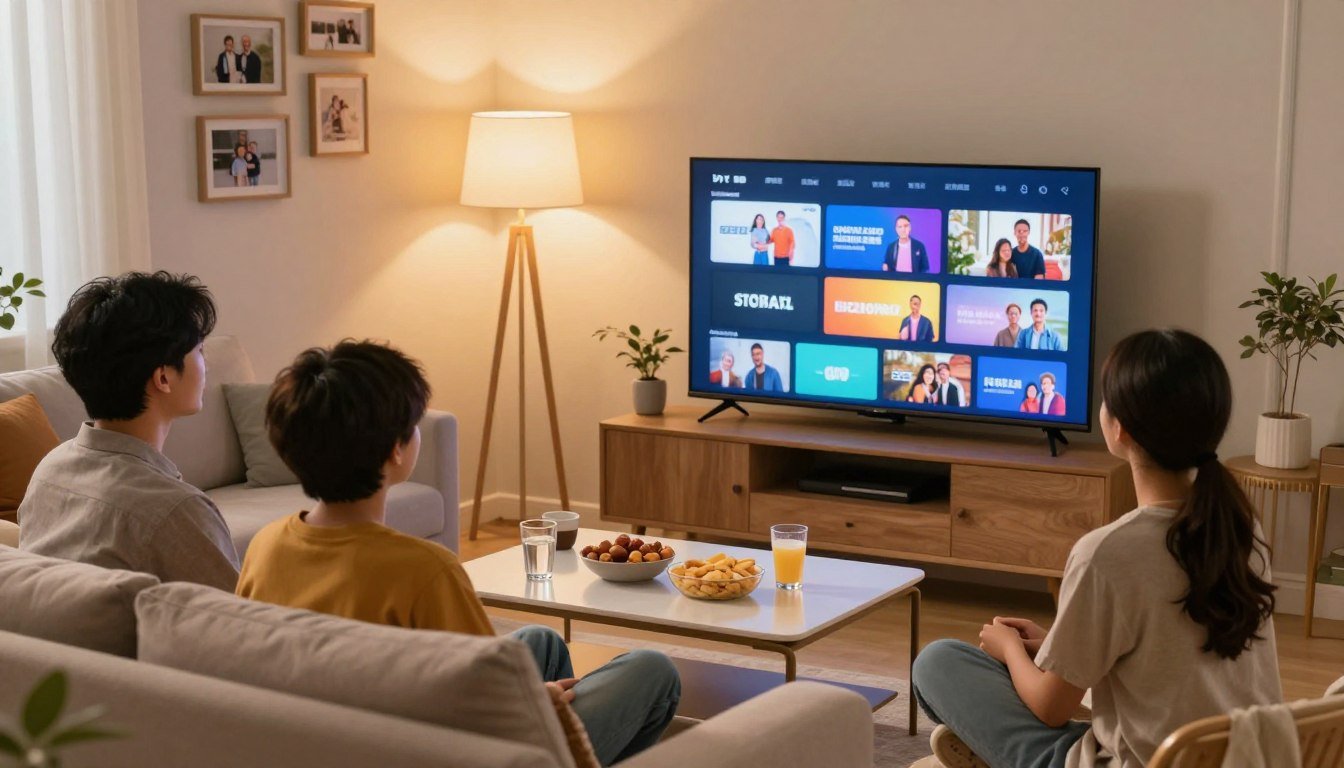
Streaming accounted for nearly half of U.S. TV watch-time in August 2026, making on-demand video central to American viewing. The future of streaming entertainment matters because audiences now choose among shows, films, live programs, and social clips. A title view is Netflix’s measure of total hours viewed divided by a title’s runtime.
Streaming’s share covers all services, not one platform’s share. In August 2026, streaming made up 49.6% of U.S. TV watch-time. That broad figure reflects many viewing choices, from subscription apps to free video platforms.
For viewers, the shift means more control over when and where they watch. It also makes attention harder for any one service to earn. Preferences change as new content, devices, and viewing experiences compete for time. The important question is how platforms will earn attention while giving viewers more control over what they watch.
What Is the Future of Streaming Entertainment?
The future is likely to be a mix of subscription video, ad-supported viewing, and social video rather than one service replacing every other screen. Streaming platforms now compete for attention across several types of video.
More than 85% of households use at least one streaming service. In January 2024, 45.6% of U.S. internet users ages 16-64 paid monthly for a TV or movie streaming service.
A new format can add another way to watch without making older screens useless.
Why viewers move between scheduled TV, streaming, and social video
Viewers move between scheduled TV, streaming, and social video because each suits a different moment. Broadcast and cable still offer scheduled programs, while streaming gives viewers more control over timing.
Social platforms bring creator content and short clips into the same daily mix. YouTube captured 15.8% of U.S. TV viewing in August 2026, a platform record. TikTok Shop launched in the United States in September 2023, adding shopping to a social video service.
The shift also creates new demands for video streaming services. Viewers may want a full movie one night and a short creator clip the next. Platforms compete not only with one another, but also with broadcast, cable, and social feeds.
When did online streaming begin?
Online streaming emerged in the 1990s, and Netflix launched its streaming service in 2007. Faster home internet and connected devices helped make online video easier to watch.
A 2021 view of the future of streaming entertainment is a dated snapshot, not a current forecast. The future of streaming TV, sometimes tagged FOS, has kept changing as services and viewing habits shift.
The video streaming market is projected to exceed $400 billion by 2030. That projection points to expected market growth, not a promise that every platform will succeed.
Which technologies may change the viewing experience?
AI, cloud delivery, 5G, and immersive formats may shape streaming, but they are at different stages of use. AI already helps platforms sort content and suggest what viewers might watch next.
Cloud delivery sends video over internet networks rather than relying on a local broadcast signal. 5G can improve mobile delivery, while 4K and HDR can make a compatible picture clearer and richer.
- AI supports recommendation and discovery.
- 5G supports faster mobile delivery.
- 4K and HDR improve picture quality.
- VR and AR can support interactive viewing.
Virtual reality and augmented reality may create new experiences, but they need compatible devices and content. Their role depends on adoption, comfort, and the kinds of programs viewers want.
Viewers should treat immersive formats as an emerging option, not a reason to buy a new device before it suits their habits.
How Are Streaming Services Changing Their Business Models?
A streaming service can gain flexibility by pairing a lower-priced ad-supported tier with ad-free plans and bundles. More choice can help viewers manage subscription fatigue, while ads give platforms another way to earn revenue.
A change in one service’s business model does not prove that streaming is declining. Platforms also use partnerships and bundles to reach viewers who may not want many separate bills.
How ads and bundles reshape subscription choices
Netflix’s U.S. Standard with ads plan costs $8.99 per month. Its Standard plan costs $19.99 per month, and Premium costs $26.99 per month.
| Plan | Monthly price | Ads | Devices at a time | Resolution |
|---|---|---|---|---|
| Standard with ads | $8.99 | Yes | 2 | 1080p Full HD |
| Standard | $19.99 | No | 2 | 1080p Full HD |
| Premium | $26.99 | No | 4 | 4K Ultra HD + HDR |
Extra members cost $7.99 per month with ads or $9.99 without ads in the United States. Standard allows one extra member outside the household, while Premium allows up to two.
Netflix bills monthly and offers no annual, multi-month, or lifetime membership plans. Those limits matter when comparing a recurring subscription with a bundle or another service.
How content windows affect streaming economics
The theatrical window is the period a film plays in theaters before home release. Later release windows and library titles can bring films to streaming services after their first run.
The economics of streaming services now depend in part on those licensing windows. Movies represented roughly 27% of total U.S. streaming revenue in 2022 and nearly 50% in 2024.
Pay-2/3 and library windows made up about two-thirds of movie-driven streaming revenue, up from 26% in 2022. Netflix had 325 million subscribers as of December 2025, compared with 205 million for Amazon Prime Video.
Netflix leads those listed subscriber figures, but subscriber totals do not compare viewing time or engagement. Before adding a service, compare its monthly cost with the titles and features you will actually use.
What Does Streaming Mean for Movie Theaters?
Home streaming has become a real alternative to theaters, but moviegoing remains part of U.S. entertainment habits. In a 2025 survey, 75% of Americans said they had recently chosen to stream a movie at home instead of seeing it in a theater.
The share of people who frequently saw films in theaters fell from 39% in 2019 to 17% in 2025. U.S. and Canadian theaters sold 769.2 million tickets in 2025, compared with 1,570.0 million in 2002.
A home release can add access, but its timing can also compete with a theater run.
Ticket sales in the United States and Canada topped $9 billion in 2025, measured in constant 2025 dollars. In a July 8-August 3, 2025 survey, 53% of U.S. adults had seen a movie in a theater during the previous 12 months.
The age gap was clear: 67% of adults ages 18-29 had gone, compared with 39% of adults ages 65 and older. Streaming’s negative impact on the film industry cannot be separated from other changes in moviegoing habits.
The impact of streaming on cinema attendance includes both competition and a new release path for films. The big screen offers a shared experience, while home viewing offers convenience and flexible timing. Treat theater attendance trends as evidence of changing choices, not proof that streaming alone caused the change.
Conclusion
The future of streaming entertainment will be shaped by how well platforms balance convenience, choice, and value. Useful discovery and sustainable options matter more than novelty alone. New formats must earn their place in the media people already use.
Viewers can make that balance more personal by checking which services still fit their routines. Pause one that no longer earns its monthly cost, then see whether anything important changes. That simple check can free money and attention for the experiences that matter. Review your subscriptions this month and keep the services that genuinely improve how you watch.






Leave a Reply