

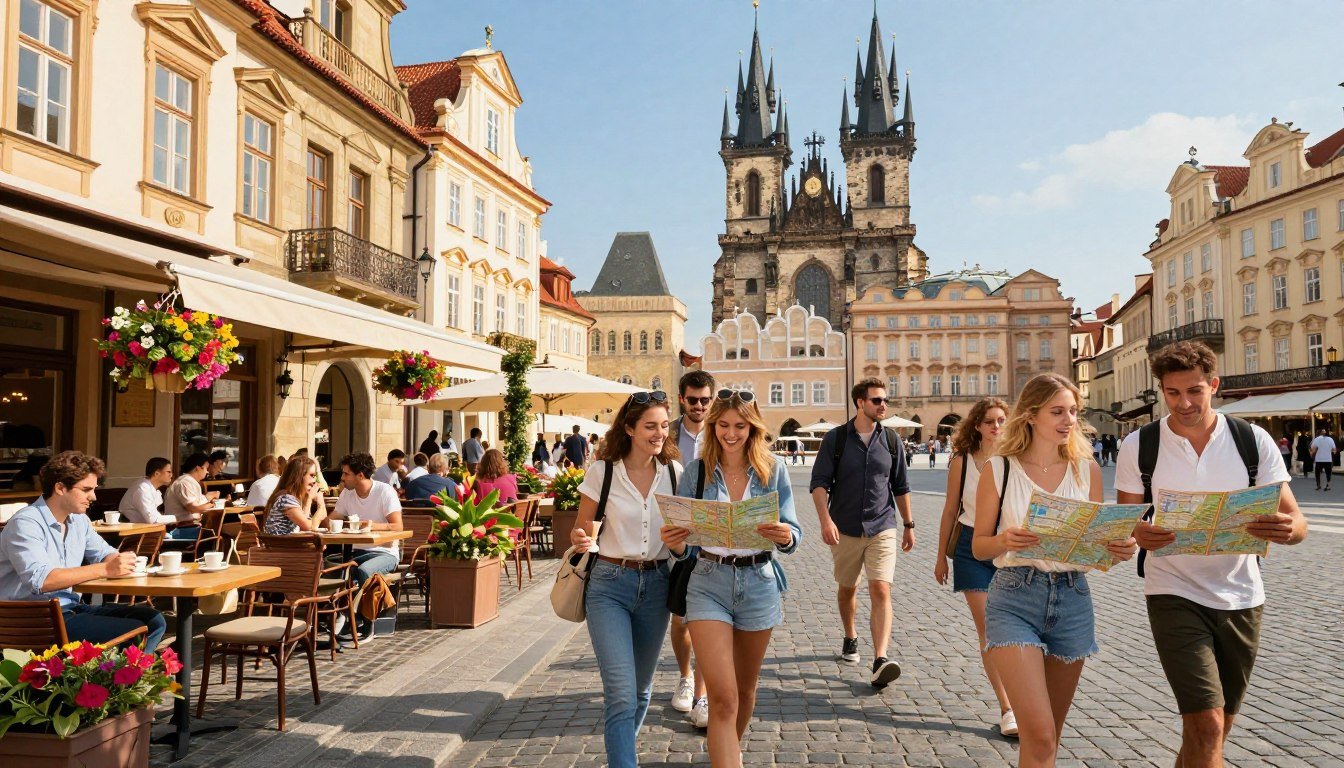
A first trip to Europe is easier to plan when you choose a few places that fit together rather than trying to see the whole continent. The best places to visit in Europe balance recognizable sights, manageable travel days, and room for your own interests. That mix matters when every stop is new and travel time can take more hours than expected.
Some travelers want a capital full of museums and grand buildings. Others would rather wander a compact old town, sit beside the water, or take a train through the countryside. A strong trip can include more than one kind of place without turning each day into a race.
Europe offers major capitals, smaller cities, and scenic coastlines, each with a different pace and feel. The right balance depends on what you love, how much time you have, and how often you want to change hotels.
Build the trip around a small number of bases, then leave time to enjoy each one.
Best Places to Visit in Europe for First-Time Travelers
Italy, France and Spain are the clearest starting trio for a first European trip, with Portugal and Greece strong additions for travelers who want a coastal or island component. These five offer famous sights, varied food, and cities with plenty of visitor services.
A practical first-trip shortlist is Italy, France, Spain, Portugal and Greece. In 2024, Spain, Italy and France made up 46% of nights EU residents spent on foreign trips within the EU. Italy led by trip count, followed by Spain.
A country shortlist is a menu, not a required itinerary. Match the places to your interests and available time.
Familiar first stops with easy logistics
Rome, Paris and Barcelona make clear first stops for travelers drawn to landmark-rich cities. Each has a major airport, well-known sights, and transit options that help visitors move around without renting a car.
Italy was the most popular foreign destination by trip count for EU residents in 2024, at 10.7%. Spain followed at 10.4%. By nights, Spain led with 11.7%, followed by Italy at 10.2%.
These figures show how often travelers choose the countries, not which city will suit every visitor. A first European city should fit the trip’s pace and interests as much as its fame.
A quieter first route beyond the biggest capitals
Portugal and Greece are strong picks for travelers who want coastal scenery and food alongside history. Lisbon offers a lively city base, while Athens pairs ancient sites with access to Greek islands.
| Country | First-stop city | Signature first-trip draw |
|---|---|---|
| Italy | Rome | Ancient landmarks |
| France | Paris | Museums and architecture |
| Spain | Barcelona | Gaudí architecture and food |
| Portugal | Lisbon | Hillside neighborhoods and river views |
| Greece | Athens | Ancient sites |
A top 50 destinations in Europe list is an editorial shortlist, not an official ranking. Each list reflects its writer’s interests, travel style, and view of what makes a place memorable.
Choose no more than two or three countries for a first visit if you want time to settle into each place.
Ten City Picks for a First European Trip
A useful first-trip city shortlist can start with Paris, Rome and Barcelona, then add destinations that match the traveler’s interests. There is no official order for the top 10 places to visit in Europe, so compare each city by its main draw.
Choose a city for the experience you want, not for its place on a ranking. These ten European cities offer varied architecture, history, food, and ways to spend a day.
- Paris combines major museums, historic churches, and walkable neighborhoods.
- Rome brings together the Colosseum, Pantheon, and ancient ruins.
- Barcelona is known for Gaudí architecture and the Gothic Quarter.
- Florence centers on the Duomo, Ponte Vecchio, and Renaissance art.
- Prague’s Old Town has an astronomical clock and Charles Bridge.
These first five fit travelers who want famous sights and strong city character. Paris is a capital with a huge museum range, while Florence is more compact and focused on art.
- Lisbon pairs hillside streets with river views and a lively food scene.
- Amsterdam offers canals, museums, and neighborhoods made for walking.
- Edinburgh combines an old town, a castle, and dramatic hill views.
- Athens connects ancient sites with modern neighborhoods and cafes.
- Budapest stands out for Danube views, grand buildings, and thermal baths.
A city list helps with comparison, but a route needs more than famous names. Consider how many transfers your plan requires and whether you enjoy busy capitals or smaller centers.
Pick the cities that share a travel style, rather than choosing all ten for one itinerary.
Where to Find Italy Beyond Rome
Travelers who want art and walkable sights can make Florence their Italian base, while Venice suits those drawn to canals and a distinctive old town. Both give a very different feel from a capital, with sights that reward time on foot.
Florence and Verona suit short stays, while Vicenza works for a less-visited stop. A day trip can extend a base, but it should not crowd out the city itself.
Florence for Renaissance art and compact walks
Florence puts major Renaissance sights close enough to plan a focused visit. The Duomo, Palazzo Vecchio, Ponte Vecchio, Uffizi, and Accademia give art lovers a full range of landmark stops.
The cathedral’s dome anchors the city center, while the Uffizi holds works by leading Renaissance artists. The Accademia is known for Michelangelo’s David. Book enough time for each museum, since moving between visits and taking breaks can fill much of a day.
Florence also works well for travelers who prefer a clear walking plan over a long list of distant sights. Choose a few main stops, then keep time for a meal or a slow walk beside the Arno.
Venice and Verona for striking old towns
Venice offers canals, bridges, and a city center shaped by water. San Marco is quieter early in the morning than later in the day, giving visitors a more peaceful start among its grand buildings.
Verona offers a different kind of historic center. Its Arena, Piazza Bra, and Piazza dei Signori anchor a route through old streets and open squares. Vicenza is smaller, with a compact old town known for the buildings of architect Andrea Palladio.
Travelers can use Florence or Verona as a short base and add a day trip if the route allows. Vicenza can suit visitors who want a quieter stop, though its appeal is more focused on architecture than a large range of sights.
Reserve the earliest hours in Venice for wandering before the busiest part of the day.
Spain Rewards More Than One Stop
Choose Barcelona for an urban mix of architecture and neighborhoods, or pair Granada and Seville for a closer focus on Andalusian history. The contrast is the point: Barcelona’s styles and city energy feel different from southern Spain’s palaces and historic lanes.
Give Granada’s Alhambra complex a full visit rather than treating it as a quick stop. The site includes the palace and Generalife Gardens, with more to see than one brief look can cover.
Barcelona for architecture and city energy
Barcelona blends Gaudí’s bold buildings with a Gothic Quarter of narrow streets and older stone facades. The city suits travelers who enjoy architecture, food markets, and neighborhoods that each feel distinct.
Its character differs from Andalusia, where palaces, gardens, and long layers of history shape the visit. Barcelona can fill several days without requiring a separate city for every interest.
Granada and Seville for Andalusian history
Granada’s Alhambra and Generalife Gardens are major historic draws. The Albayzín, a historic Arab quarter, adds steep lanes and views across the city. In Seville, the Alcázar, Giralda, and Plaza de España offer a mix of palace rooms, gardens, and open public spaces.
Use these planning choices to give each stop its own pace:
- Reserve time for the Alhambra.
- Walk Granada’s historic lanes.
- See Seville’s palace and gardens.
- Leave space for Barcelona’s neighborhoods.
Each city has a different rhythm, so avoid treating every day as a checklist. A little unplanned time makes room for a local meal, a market visit, or a break between major sights.
Set aside a full visit for the Alhambra complex rather than treating it as a quick stop between cities.
Central Europe for Old Towns and Big Views
Prague is the strongest pick for a medieval old-town atmosphere, while Budapest stands out for riverside views and thermal baths. Kraków offers a more compact core with historic buildings and major cultural sights within one city center.
Choose among Prague, Budapest, and Kraków by the kind of city day you enjoy. Each has a memorable old town, but the sights and pace differ.
Prague and Budapest for landmark-rich stays
Prague brings together medieval streets, the astronomical clock, Charles Bridge, and Prague Castle. The castle complex stands above the city, while the old center is easy to explore on foot.
Travelers with extra time can take a day trip to Kutná Hora from Prague. The town’s Sedlec Ossuary, known for its bone decorations, offers a striking change from the capital’s grand squares and bridges.
Budapest follows the Danube, with river views that frame the Parliament Building and other grand structures. Thermal baths add a relaxing break from walking, especially for visitors who want more than museums and churches.
Kraków for history and an intimate center
Kraków’s historic center includes Wawel Castle and the Cloth Hall. Its compact scale can make it easier to plan a day around the main sights without crossing a large city.
The city suits travelers drawn to history and a strong sense of place. Wawel Castle overlooks the river, while the Cloth Hall sits in the central market square among cafes and historic facades.
Prague and Budapest offer more distinct landmark districts and larger urban views. Kraków’s core is a better fit when you want a close-knit center and room for an unhurried meal.
Choose Kraków when a compact historic center matters more than fitting several landmark districts into one day.
Smaller European Cities Worth a First Trip
Strasbourg and Bruges suit travelers who want historic lanes and memorable architecture without choosing another major capital. These smaller city centers offer a more focused stay, with local character that comes through in their streets and public spaces.
A compact center can make a short visit feel rewarding, but not every sight sits beside the next one. Check the map before planning a full walking day.
Strasbourg and Bruges for historic lanes and canals
Strasbourg’s Grande Île and Petite France show its French-German architectural mix. Timbered houses, canals, and broad squares create a setting unlike the grand avenues of a large capital.
Bruges is known for canals, medieval buildings, and a central belfry. Its old town works well for a short stay focused on walking, local cafes, and a climb for views over the rooftops.
Ljubljana and York for a relaxed city scale
Ljubljana centers on a riverfront old town, with cafes beside the water, a hilltop castle, and a central market. The city’s scale makes it easy to combine a market visit with time along the river.
York offers a different mix, led by York Minster, old city walls, and the Shambles. Its cathedral draws the eye across the center, while the narrow Shambles gives visitors a close look at the city’s older street pattern.
Short stays here can still hold a full day, though hills, museum visits, or walking routes may take longer than a map suggests. Plan a few stops and leave space to sit down between them.
In York, include the city walls and the Shambles in the same walk if the day is clear and comfortable.
Cooler Northern Destinations
Iceland is the clearest pick for a cool-weather summer escape, while Finland, Norway and Sweden offer other northern options. The north also suits nature trips, with cities that can serve as bases for forests, fjords, and open water.
No index can promise the conditions on a specific travel date. The 2026 Summer Heat Escape Index ranked 25 countries using six factors: August daytime and nighttime temperatures, sea temperatures, forest coverage, population density, and wild-camping access.
Iceland and Norway for dramatic landscapes
Iceland ranked first in the index, with a score of 83.81 out of 100. Its average August daytime temperature was 10.7°C, and its average night temperature was 8.1°C.
Reykjavik pairs colorful streets with trips toward the Blue Lagoon or Golden Circle. The city makes a useful base for travelers who want both urban time and dramatic scenery.
Norway ranked third, while Bergen combines a historic harbor with access to fjords. August sea temperatures averaged 9.5°C around Akureyri, Iceland, and 5.3°C at Ny-Ålesund, Norway, so water can stay cold even in summer.
Finland, Sweden and the Baltic states for forest and city breaks
Finland ranked second, with an average August temperature of 17°C and nearly three-quarters of the country covered by forest. Helsinki offers a city break, while the wider country suits travelers drawn to wooded areas and lakes.
Sweden ranked fourth. Estonia, Latvia, and Lithuania ranked fifth, sixth, and seventh. These countries offer city visits and regional travel beyond the best-known capitals.
The index used air-temperature averages from 1991-2020 or 1991-2021 climate periods, plus sea-temperature observations from the prior decade. Those long-term measures compare places, but they cannot tell you the weather for a particular day or night.
Check the forecast and sea conditions before planning any water-based activity in the far north.
Coasts, Islands, and Scenic Towns
Dubrovnik and Kotor are strong choices for travelers who want old-town streets with Adriatic views. Both pair historic centers with a waterfront setting, while other coastal places suit island days or cliffside walks.
A town-focused coastal trip differs from a beach-first holiday. Choose places for the kind of day you want, since an attractive harbor does not always mean an easy swim or long sandy beach.
Adriatic towns and Mediterranean islands
Dubrovnik is known for its city walls, terracotta roofs, and harbor. Kotor’s walled old town sits beside the Adriatic, with a fortress viewpoint above the streets.
Kefalonia offers coves, villages, and Melissani Cave, giving visitors a slower Greek island pace. The Côte d’Azur brings together coastal towns such as Nice, Cannes, and Saint-Tropez, each with its own waterfront feel.
Coastal scenery beyond the beach
Cinque Terre consists of five villages set along steep coastal slopes. The views come from lanes and paths as much as from the water, so it can suit a walking-focused trip.
Use these four priorities to shape a coastal stay:
- Walk through the town rather than only its main square.
- Choose one viewpoint that fits your route.
- Set aside time beside the water.
- Keep one day flexible for changing weather.
A coastal town may offer more than sun and swimming. Its food, streets, and harbor can fill a day even when the sea is rough or clouds cover the view.
Keep one flexible day in a coastal itinerary in case wind or rain changes boat plans.
Add a Landscape Beyond the City Center
A first European trip can feel more varied when one landscape stop balances the museum and old-town days. One well-chosen outing can add waterfalls, mountains, or unusual rock formations without making every day a transfer.
Choose one landscape excursion that fits your route instead of adding several long transfers. Plitvice Lakes National Park is known for waterfalls, with paths that lead through forests and beside pools.
Cappadocia in Türkiye is known for fairy chimneys and cave churches. Its rock shapes and historic spaces create a striking change from city streets, though reaching the region takes separate planning.
Neuschwanstein Castle sits in Bavaria, surrounded by mountains and wooded slopes. The castle can make a memorable day out, but the approach and visits need to fit the route rather than being squeezed between distant cities.
Pamukkale’s white terraces formed through mineral-rich spring water and calcium carbonate deposits. The bright pools stand out from the surrounding landscape and make the area a distinct stop.
These places can require separate transport plans, especially when they sit far from a chosen city base. Add one only when the travel time leaves room to enjoy the site itself.
Best Places to Visit in Europe by Month and Season
Spring and fall are the most versatile starting seasons for many first trips, while summer suits travelers prioritizing long days and coastal stops. Shoulder season means the period between a destination’s busiest and quietest travel seasons, often with fewer visitors than peak season and more services open than in low season.
Season labels differ by place, and they do not promise local weather. In a 2026/2027 Europe travel guide, April-June and September-October count as shoulder-season periods, while June-August is high season and November-March is low season.
Spring and fall for shoulder-season travel
Spring and fall can bring milder sightseeing conditions and less peak-season pressure. They work well for travelers who want city walks and cultural stops without planning around the highest summer demand.
Season labels can shift within the same guide. March and April are also identified as shoulder-season months, May as high season, and September and October as shoulder season.
For June-November 2026, 81% of Europeans surveyed planned to travel, four percentage points more than for the same period in 2025. Of those intending to travel, 64% planned to stay within Europe.
Summer and winter for distinct experiences
Summer brings long daylight and popular coastal destinations, but also high demand. Winter suits travelers interested in markets, museums, and northern lights opportunities, though some attractions and services may run on shorter schedules.
| Season | Months | Typical trip appeal | Example destinations |
|---|---|---|---|
| Spring | April to May | City walks and mild days | Amsterdam and Lisbon |
| Summer | June to August | Long days and coastal stops | Rome and Dubrovnik |
| Fall | September to October | City breaks and fewer peak crowds | Budapest and Kraków |
| Winter | November to March | Museums, markets, and northern lights | Paris and Bergen |
For June-November 2026 trips, 61% of Europeans favored Southern and Mediterranean Europe. Intended destinations included Spain at 14%, Italy at 12%, France at 8%, and Greece at 7%.
Check the opening dates of seasonal attractions before locking in a shoulder-season itinerary.
How to Avoid Crowds and Summer Heat
For a first trip that is sensitive to heat or queues, avoid building every stop around southern Europe in July and August. Dates and daily timing matter, though no city or region is guaranteed to stay cool or uncrowded.
Visit popular sights early, choose shoulder-season dates when schedules allow, and consider cooler northern destinations for July. Mountain and coastal areas can still have heat, crowds, or fast-changing conditions.
Choose dates and daily hours strategically
August was the busiest month for accommodation nights in 174 of 244 EU regions with data in 2024. July was busiest in 48 regions, showing that peak patterns vary by location.
July and August together made up more than 40% of annual accommodation nights in 39 of those 244 regions. The EU average was 31%, so a less concentrated region may offer a different summer pace.
Start popular visits early and avoid stacking several timed attractions into one afternoon. A slower morning can help you see more before the busiest hours build.
Consider cooler regions and heat-sensitive plans
In a 2026 survey, 76% of Europeans said climate-related factors influenced their travel behavior. Sixteen percent actively sought milder destinations, while 15% avoided places prone to extreme heat or checked forecasts before booking.
Summer 2026 was the third-warmest over European land, 1.17°C above the 1991-2020 average. August ranked fourth-warmest at 20.26°C, or 1.10°C above that average.
| Situation | Evidence or condition | Practical response |
|---|---|---|
| August crowds | 174 regions busiest in August | Travel in shoulder season or start early |
| July-August concentration | 31% EU average | Choose a less concentrated region |
| July heat | Southern and inland areas can run hotter | Check forecasts and consider northern Europe |
| Summer crowd tradeoff | Longer daylight and high demand | Prioritize tickets and early starts |
Parts of France, Italy, Bosnia and Herzegovina, Croatia, Hungary, Romania, and the Balkans were generally 3-5°C above the 1991-2020 average in August 2026. That past pattern cannot predict a future travel day.
Check the local forecast shortly before departure and shift outdoor sightseeing to cooler parts of the day.
Build a Two-Week Europe Trip Without Rushing
Two weeks is enough for a rewarding first trip if the route has only two or three main bases. A focused route leaves more time for meals, museums, and the small moments that make a city feel like more than a stop.
Two or three bases usually work better than a continent-wide circuit. One example pairs Paris and Rome with one nearby day trip, or Lisbon with two Andalusian stops.
Plan the route in four steps:
- Choose one region.
- Select two or three bases.
- Check transfer time between each stop.
- Reserve unscheduled time for rest or surprises.
| Route style | Number of bases | Sample route | Best fit |
|---|---|---|---|
| Capital pair | 2 | Paris and Rome | First-timers |
| Single-country loop | 3 | Rome, Florence, and Venice | Italy-focused trip |
| Iberian route | 3 | Lisbon, Seville, and Granada | Culture and food |
| City-and-coast | 2 | Athens and a Greek island | A varied pace |
$5,000 can cover one traveler’s two-week trip with careful choices, especially without transatlantic airfare. Two travelers sharing that total or traveling in peak season may need tighter lodging and activity choices.
Estimate airfare, lodging, meals, local transport, and attraction tickets as separate costs. A low flight fare does not guarantee a low total if lodging or long transfers take a large share.
Price flights and lodging before committing to the final route because those costs can reshape the whole budget.
Choose Stops That Suit Families and Teens
York and Amsterdam are strong family choices when a trip needs museums, outdoor breaks and easy-to-understand highlights. Rome and Edinburgh add ancient history, castle visits, and outdoor walks for families who want a mix of indoor and active days.
Match the daily pace to the youngest traveler, then add activities that interest older kids and teens. Short travel legs and regular breaks can matter more to younger children than another famous sight.
Family trips with a manageable pace
York offers the National Railway Museum, Museum Gardens, and York Minster. Amsterdam combines canals and museums, with Keukenhof Gardens nearby for a different kind of outing.
Rome gives families a direct way into ancient history through the Colosseum and other major sites. Edinburgh links the castle and Royal Mile with the outdoor walk up Arthur’s Seat.
For a family visit in August, start early, take shade breaks, and use a slower schedule in busy destinations. One major sight and a relaxed afternoon can make a better day than a packed plan.
Teen-friendly cities and activities
Teens may enjoy museums with hands-on displays, lively markets, active walks, and history they can picture in real places. A city with several kinds of activities makes it easier to share the day across age groups.
Before booking, check four family details:
- Choose lodging near transit.
- Book timed-entry sights.
- Plan one daily rest break.
- Pick a backup rainy-day activity.
Agree on one must-do activity per person before booking the day’s schedule.
A shared plan gives each person a say without turning every hour into a negotiation. Leave some space between activities so an unexpected snack stop or slow walk does not derail the day.
Conclusion
A memorable first trip does not require seeing every famous place in Europe. Choose a small group of destinations that match your interests and travel month, then give each stop enough time to feel distinct.
Start by selecting two candidate bases and checking the transport links between them. Look at opening schedules before booking, especially for attractions with limited hours or seasonal access.
Choose two bases, check the connections between them, and start with the dates that fit your travel style.








Leave a Reply