

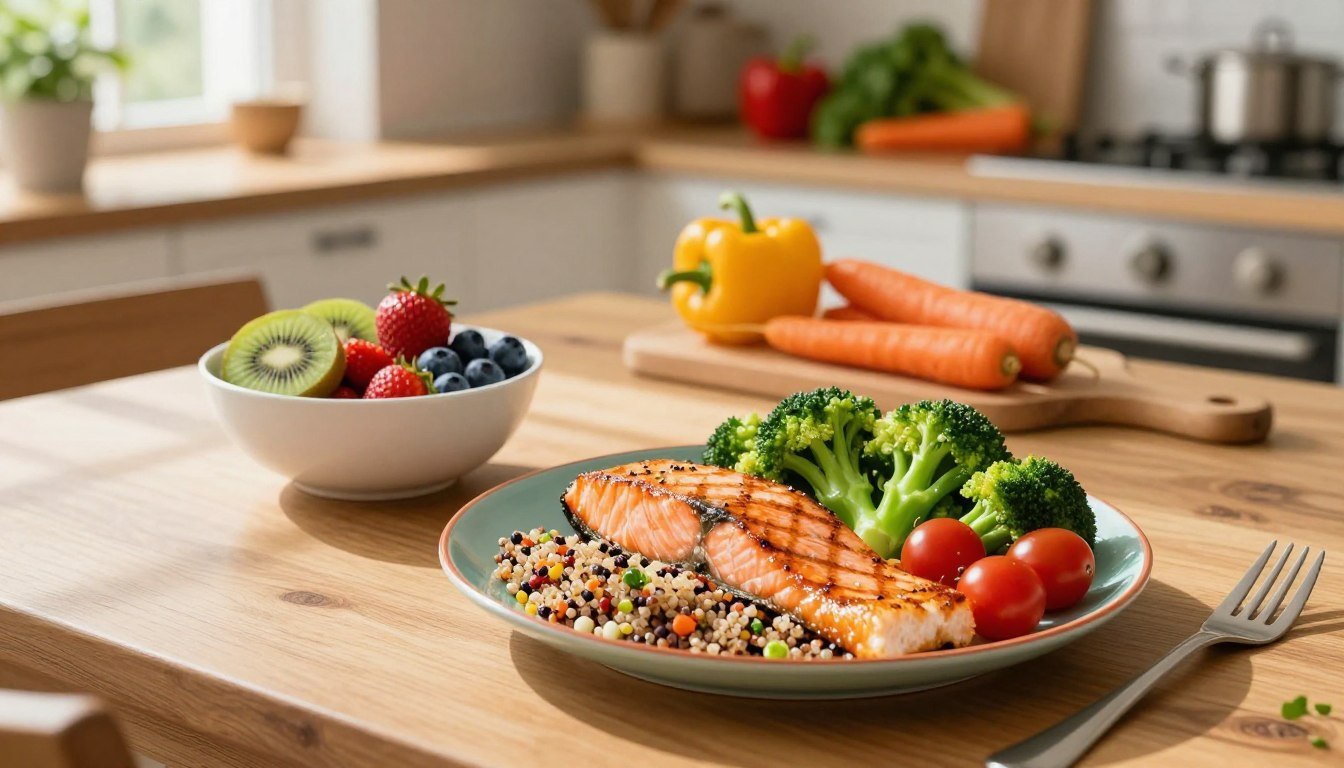
A balanced approach to everyday eating relies on variety, nourishing foods, and portions that suit your needs. A balanced diet plan can support health without asking you to make every meal perfect. Your everyday choices matter more than getting one meal exactly right.
People have different needs at different stages of life, and age is only one part of the picture. Your body’s needs can also reflect your health, activity, and the foods you enjoy. This guide offers general ideas for adults, not a personal medical plan.
A clinician or registered dietitian can help tailor food choices for a medical condition or special dietary need. You can make changes gradually, using foods and routines that already work for you. Start with one meal you already eat and look for one easy way to add variety.
How Do You Build a Balanced Diet Plan?
A useful first template is to fill half your plate with produce and divide the other half between protein and whole grains. Start simply, with one meal you can repeat and adjust. The plate model gives you a practical structure without dictating an exact amount for every person.
A balanced diet plan template can use half produce, one-quarter protein, and one-quarter whole grains. A balanced diet plan for beginners can begin with one meal a day, rather than a full overhaul. Build from there as the routine feels manageable.
Use the plate as a starting point
The Healthy Eating Plate model uses vegetables and fruits for half the plate, whole grains for one-quarter, and protein for the rest. Use healthy oils in moderation. Water, coffee, or tea with little or no sugar can go with the meal.
The plate model is a visual guide, not a mandatory serving size for every person.
A serving size is the labeled amount of a food or drink used to show its nutrition information; it is not necessarily the portion you choose to eat. Your portion size is the amount you decide to put on your plate.
Adjust for your daily needs
Your calorie needs depend on age, sex, height, weight, and physical activity level. A more active day may call for more energy, while personal physical traits also affect your daily needs. Use the plate proportions as a visual guide, then adjust the amount to your appetite and daily needs.
What Daily Amounts Should You Aim For?
For a 2,000-calorie dietary pattern, the daily targets include 3 vegetable servings, 2 fruit servings, and 3 dairy servings. Use these as starting points, since your own calorie needs may call for different amounts. The 2025-2030 Dietary Guidelines also give daily targets for whole grains and protein.
Vegetable, fruit, and dairy amounts below match a 2,000-calorie pattern and adjust to individual calorie needs. Whole-grain and protein amounts also need adjustment. These figures describe a daily pattern, not a rule to eat every food group at every meal.
| Food group | Daily target | Condition or adjustment |
|---|---|---|
| Vegetables | 3 servings | 2,000-calorie pattern; adjust to calorie needs |
| Fruit | 2 servings | 2,000-calorie pattern; adjust to calorie needs |
| Whole grains | 2-4 servings | Adjust to individual calorie needs |
| Dairy | 3 servings | 2,000-calorie pattern; adjust to calorie needs |
| Protein | 1.2-1.6 grams per kilogram of body weight | Adjust to individual calorie needs |
Milk, yogurt, and other dairy foods can count toward the dairy target. You can also use fortified alternatives when they fit your needs. Protein comes from many foods, so the daily amount does not have to come from one source.
Look at your overall food groups across the day, rather than trying to make each meal match every target. Treat the figures as starting targets, not a reason to ignore your individual calorie needs.
Which Foods Make Those Targets Easier to Meet?
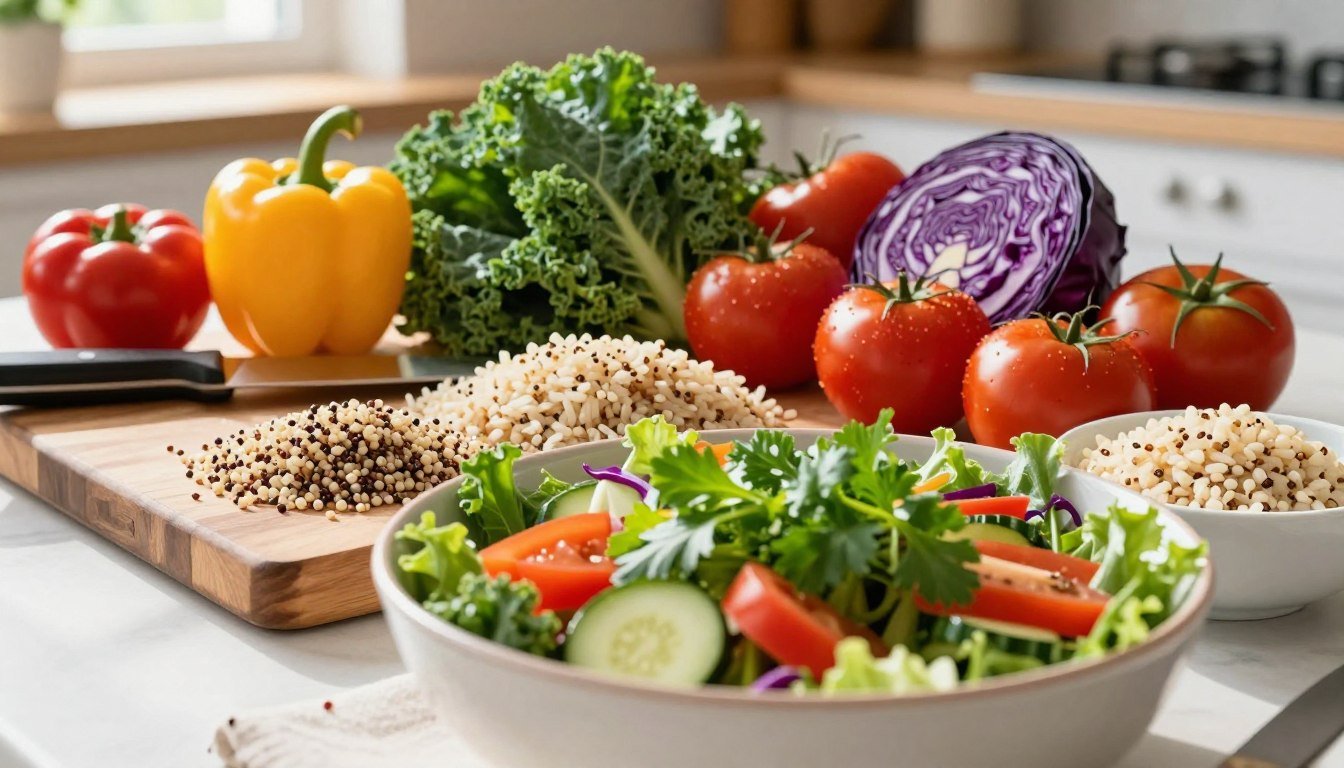
A varied pantry makes it easier to build balanced meals even when fresh ingredients or cooking time are limited. Convenience counts: frozen and canned foods can help you keep useful choices on hand. Variety across food groups helps cover different nutrients.
Choose protein from both plant and animal sources when they fit your needs. Options include eggs, poultry, seafood, and red meat, along with beans, peas, lentils, nuts, seeds, and soy. Canned or frozen foods can be useful; check labels to spot added sugar and sodium.
Try these five simple swaps to add variety without making every meal from scratch:
- Use frozen vegetables when fresh ones are less convenient.
- Choose canned fruit with little or no added sugar.
- Serve brown rice or oats instead of a refined grain.
- Replace some meat with beans or lentils.
- Add unsalted nuts or seeds to a snack or meal.
Frozen vegetables can go straight into soups, rice dishes, or a quick side. Canned fruit can work in oatmeal or yogurt. A pantry stocked with beans, grains, and seeds makes it easier to assemble food when time is short.
Look for fiber-rich whole grains as you choose grains for meals and snacks. Whole grains are prioritized over highly processed refined carbohydrates. Choose whole grains more often than refined options such as white bread, flour tortillas, and crackers.
How Can You Check Portions, Added Sugar, and Fat?
Check the serving size first, because the calories and nutrients on a Nutrition Facts label apply to that amount. Compare the amount you eat with the amount printed on the package. A portion size may be larger or smaller than the label’s serving size.
The % Daily Value (%DV) shows how much a nutrient in one serving contributes to a daily diet. The FDA bases general nutrition advice on 2,000 calories a day, so %DV is a comparison tool, not a personal target. The serving size, servings per container, and calories appear prominently on the label, with serving size and calories in bold.
Read the Nutrition Facts label
Packaged foods list added sugars in grams and as a %DV. Honey and maple syrup must show a %DV for added sugars, but their labels do not have to list added-sugar grams.
Updated FDA label rules took effect by January 1, 2020, for manufacturers with at least $10 million in yearly food sales. Smaller manufacturers had until January 1, 2021. Labels in the United States now help you compare similar packaged foods more clearly.
Make everyday drink and fat choices
The 2025-2030 Dietary Guidelines say saturated fat should generally provide no more than 10% of daily calories. They also recommend no more than 10 grams of added sugars in one meal. These limits help you judge a food within your wider eating pattern.
Choose water or unsweetened drinks instead of soda, fruit drinks, or energy drinks. For 100% fruit or vegetable juice, keep portions small or dilute juice with water. Compare like-sized servings before deciding which packaged option better fits your priorities.
How Can Eating Patterns Support Weight and Brain Health?
For adults whose high BMI reflects excess body fat, a gradual weight-loss pace is about 1-2 pounds a week. That pace is conditional, not a goal for every adult. NIH experts describe it as a safer and more sustainable rate for those adults.
Pairing calorie changes with physical activity tends to work best for weight loss. Rapid-loss goals can be hard to maintain. A steady eating pattern can also support health beyond weight, including a lower risk of heart disease, type 2 diabetes, and obesity.
Keep weight goals gradual
Changes to food and activity work together, rather than relying on one food or a short-term rule. Calorie needs and routines differ, so the pace that suits one adult may not suit another. Set goals with support when a health condition affects your weight.
Choose foods linked with brain health
Berries and other fruits, dark leafy greens, whole grains, seafood, nuts and seeds, beans and lentils, eggs, poultry, avocados, and olive oil supply nutrients associated with brain health. About 1-2 pounds a week is the gradual pace for the specific adult group described above.
Mediterranean, Nordic, DASH, and MIND eating patterns are associated with cognitive-health outcomes. A 2023 review linked these patterns with lower risk of cognitive decline and dementia, but that does not prove they prevent either condition.
Food choices can support health, but no single meal or named pattern ensures a particular result. Treat a named eating pattern as a flexible way to organize food choices, not a guarantee against disease.
How Can You Plan a Week of Balanced Meals?
A seven-day plan is easier to follow when a few ingredients appear in more than one meal. Reuse ingredients to simplify shopping and cooking without making every day identical. A balanced diet plan free of a subscription can start with food already in your pantry and a short shopping list.
This example gives you breakfast, lunch, and dinner ideas without setting a calorie target. Repeat the meals for days 1-2 and days 4-5, then use the other days for variety. Swap foods to suit your schedule and preferences.
| Day(s) | Breakfast | Lunch | Dinner |
|---|---|---|---|
| Days 1-2 | Oatmeal, berries, and nuts | Brown rice, beans, and vegetables | Chicken, vegetables, and fruit |
| Day 3 | Eggs and whole-wheat toast | Tofu, brown rice, and vegetables | Fish, vegetables, and fruit |
| Days 4-5 | Yogurt, berries, and oatmeal | Chicken, brown rice, and vegetables | Beans, vegetables, and whole-wheat toast |
| Day 6 | Eggs, fruit, and whole-wheat toast | Fish, brown rice, and vegetables | Tofu, vegetables, and fruit |
| Day 7 | Oatmeal, yogurt, and berries | Beans, brown rice, and vegetables | Chicken, vegetables, and fruit |
Choose a few prep tasks that make the week easier:
- Check pantry staples.
- Wash produce.
- Cook a grain.
- Prepare one protein.
- Portion snacks.
These steps let you use shared ingredients in several meals, while keeping the cooking manageable. Keep one flexible meal slot for leftovers or a meal that fits the week’s schedule.
When Should You Adapt the Plan for Your Needs?
A general eating pattern needs adjustment when an allergy, medical condition, or practical constraint changes what you can eat. Your daily life matters alongside age, sex, height, weight, and activity, which all affect calorie needs. Cultural or religious food practices and strong preferences can also shape suitable choices.
Bring clear details to a clinician or registered dietitian before making major changes for a medical condition. A short checklist can help you prepare for that conversation:
- Health conditions and medications.
- Allergies or food intolerances.
- Usual activity and daily schedule.
- Foods you prefer or avoid.
The Mayo Clinic Diet’s 2026 personalized meal-planning program can account for preferences, allergies, and conditions such as high blood pressure, diabetes, and high cholesterol. It is one example of tailoring, not a fit for every person. Ask a clinician or registered dietitian to review major changes when a medical condition affects your food choices.
A food plan should fit your health needs and daily life, not force you to ignore either one.
Conclusion
A useful eating pattern is one you can repeat and adapt to your real life. Consistency and flexibility matter more than making every meal perfect. You can build a routine with foods that suit your needs, your body, and the way you live.
People do not need the same plan to support health. Make one small change you can keep, then notice how it fits your schedule and preferences. Pick tomorrow’s meal now and add one fruit or vegetable and one protein food.





Leave a Reply