

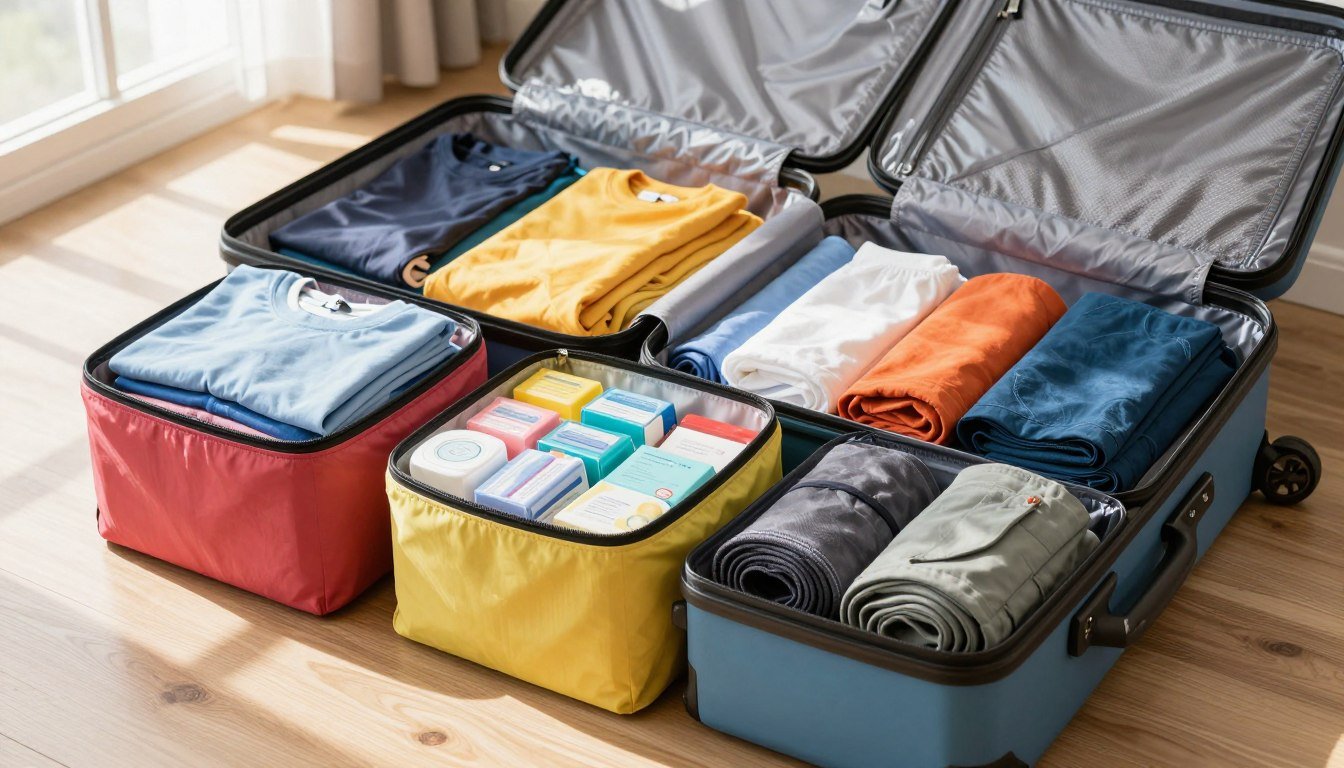
A reliable trip starts with a short core list and a few deliberate choices based on where you are going and what you will do. A travel packing checklist helps you prepare without forgetting key items or filling your luggage with things you will not use.
The essentials stay fairly consistent, but clothing, gear, and quantities change with trip length, activities, weather, and baggage plans. A packing cube is a small fabric organizer that separates belongings into groups inside luggage. Your destination and the time you have away shape the rest.
Use a simple list as a starting point, not a fixed set of rules. Keep the core items together, then add only the extras your itinerary and forecast call for.
How Can You Tailor a Packing List to Your Trip?
The most useful packing list begins with trip length, the forecast, planned activities, and the amount of luggage you can bring. Start with five categories: clothing, toiletries, documents, electronics, and activity-specific gear. A good list also accounts for laundry and repeat outfits.
For a week away, plan outfits you can repeat and wash rather than packing seven separate looks. If laundry is available, bring fewer changes and schedule a wash midway through. A week-long travel packing checklist for a city trip might include a few tops that work with two bottoms, plus one outfit for a planned dinner.
Keep fixed essentials on the list first, then add conditional extras only when the itinerary calls for them.
The best travel packing checklist is organized by category and edited for the itinerary. A complete travel packing checklist includes fixed essentials first and conditional extras second. That order makes it easier to spot what you need before adding optional items.
For a 3-5-day trip, a suggested starting point is underwear and socks for each day, one set of sleepwear, and one or two dressier outfits. Add one or two activewear outfits, one or two casual outfits, and one or two pairs of shoes. Adjust those amounts when laundry or repeat outfits are part of the plan.
For trips longer than a week, suggested amounts include underwear and socks for each day, two sets of sleepwear, three dressier outfits, three or four casual outfits, two pairs of shoes, and two activewear outfits. These are starting points, not rules for every trip. A filled-in printable checklist offers suggested items and quantity lines, while a blank version groups clothes, shoes, accessories, toiletries, entertainment, and miscellaneous items.
Save a master list and remove anything that does not fit the itinerary.
Which Travel Documents and Payment Items Do You Need?
Bring the original identity and entry documents your route requires, along with payment methods and separate document copies. Check passport validity first against the rules for every country on the itinerary before you finalize travel plans.
Passport rules differ by destination: some countries require six months remaining, while others require three months beyond intended departure. For Schengen Area travel, your passport must remain valid for three months beyond your intended departure date. U.S. passports usually last 10 years for adults and five years for children under 16.
An international travel packing checklist starts with passport validity and visa requirements for each destination. Check entry rules for every stop, including transit countries, since a connecting flight can add another requirement. Keep originals secure but accessible when you need to show them.
Check entry documents and passport validity
Confirm which documents you need for entry, transit, and booked services. Your list may include a passport or other accepted ID, a required visa, tickets, and reservations. Add travel insurance details and emergency contacts so you can find them quickly.
Document copies are backups, not replacements for originals. Make print and digital copies of passports and other travel documents, prescriptions, health-insurance documents, and immunization records when possible. Keep digital files somewhere you can reach without relying on a single device.
Keep payment details and backup copies accessible
Pack a credit or ATM card, some cash, and any insurance cards you may need. Keep payment cards in a secure place, and consider carrying a second card separately from your main wallet. That way, one misplaced bag does not hold every way to pay.
Use document copies for details you may need to share or recover, while keeping the original documents available for official checks. Add your itinerary and emergency contacts to both your travel papers and a trusted person’s records. Store a document copy separately from the original so one is not the only version available.
What Clothes and Shoes Fit Your Destination?
A compact wardrobe works best when each top pairs with more than one bottom and the shoes suit the day’s main activity. Build around repeatable pieces, then choose layers based on the forecast, walking plans, and any dress code.
Neutral, mix-and-match tops and bottoms cut outfit duplication without limiting your choices. A dark pair of pants can work for daytime sightseeing and a casual dinner. A light top can pair with more than one bottom, so you gain outfit options without adding another full outfit.
Build a small mix-and-match wardrobe
Pack underwear and socks for your plans, plus sleepwear that suits the room and expected temperatures. Choose clothes you already like wearing together, rather than packing a new outfit for every possible event. A simple color range can make more combinations from fewer pieces.
A versatile layer helps when indoor rooms, evenings, and outdoor conditions feel different. Merino wool layers can work in changing conditions, while UPF clothing offers added sun protection. Pick fabrics that fit the climate and the care options available during your trip.
Choose layers and footwear for the forecast
Comfortable walking shoes matter when your plans include long days on your feet. Add dressier footwear only if a reservation, event, or dress code calls for it. Shoes should suit the route, not just the outfit.
Use the forecast to guide your outer layer and choose clothing that can handle the expected conditions. A light, waterproof jacket is useful when rain is forecast. The table offers a quick way to match clothing choices with common trip conditions.
| Weather or activity | Clothing base | Useful extra |
|---|---|---|
| Warm and dry | Breathable tops and lightweight bottoms | Sun hat |
| Cool | Long sleeves and pants | Merino wool layer |
| Rainy or windy | Quick-drying base clothes | Waterproof jacket |
| Lots of walking | Comfortable everyday clothes | Supportive walking shoes |
Check the forecast again shortly before departure and swap layers if conditions have changed.
Which Toiletries Belong in Your Bag?
Start with the products you use every day, then add only the items your routine or destination calls for. Keep the toiletry kit personal: the right contents depend on what you use, not a one-size list.
Bring the hygiene basics you rely on, then add routine items only when you will use them. A toothbrush, toothpaste, floss, and deodorant cover several daily needs. Shampoo, conditioner, and body wash may also belong in your kit, especially if you prefer familiar products.
Cover everyday hygiene and skincare
A simple travel toiletries list can include a toothbrush, toothpaste, deodorant, shampoo, conditioner, face cleanser, and shaving supplies. Add floss if it is part of your daily routine. Refillable bottles of about one to three ounces are usually enough for products you use often on a short trip.
Face wash and moisturizer can help you keep your regular routine away from home. Body wash is useful when you do not plan to use what your lodging provides. Choose only the amount you are likely to use, since full-size bottles can add bulk.
Add personal-care items that match your routine
A more detailed personal-care kit could include a mini razor, shaving cream, lip balm, and makeup remover. A travel packing checklist for women should reflect the individual’s routine, with menstrual products or makeup included when needed. Neither belongs on every person’s list by default.
Hair tools also depend on your habits and destination. Check that international hair tools are dual-voltage before packing them. A dual-voltage tool can support different electrical systems, but you still need the right plug shape for the outlet.
Keep containers closed and place leak-prone products in a separate sealed pouch. That small step can protect clothing if a cap loosens during transit. Put leak-prone containers in a separate sealed pouch inside the toiletry kit.
What Should Go in a Travel Health Kit?
Pack prescription medicines in their original bottles and check whether any are restricted at your destination. Build the kit around your health needs, then add prevention items that fit the places and activities on your route.
Check destination-specific health risks and medication restrictions before you travel, and ask a clinician when you need help choosing medicines. A short trip to a city and a remote outdoor stay may call for different supplies. Keep the items you rely on easy to find.
Pack prescriptions and familiar remedies
Use these six groups as the core of a practical health kit:
- Prescription medicine in original bottles
- Pain or fever medicine
- An antihistamine
- Diarrhea or motion-sickness medicine
- First-aid supplies
- Hand or sun protection
Choose over-the-counter medicines you already know how to use. A familiar pain or fever medicine may be more useful than an unfamiliar product bought on the road. If a medicine has country-specific limits, check those rules before packing it.
Add prevention and basic first-aid supplies
For hand hygiene, choose sanitizer with at least 60% alcohol or antibacterial hand wipes. Sunscreen should protect against UVA and UVB rays and have SPF 15 or higher. These items help address common exposure during outdoor travel.
Insect repellent with an active ingredient such as DEET or picaridin may suit trips where biting insects are a concern. Water-purification tablets or a filter may also fit itineraries where safe drinking water is not easy to access. Match these additions to the route instead of packing them automatically.
Other useful options include high-quality masks, sunglasses, a hat, earplugs, and water-purification supplies for relevant trips. A basic first-aid kit should match the length and type of travel, without crowding out medicine you need every day. Keep the medicines you rely on in an accessible place rather than buried under clothing.
Which Electronics and Power Adapters Should You Pack?
A plug adapter solves a shape mismatch, but it does not automatically make a device compatible with a different voltage. Check power needs separately: a plug adapter changes plug shape, while a voltage converter changes electrical voltage.
Read each device label and confirm whether it supports the voltage used at your destination. Some devices accept more than one voltage, while others need a voltage converter. An adapter alone cannot change the electrical supply.
Match devices with chargers and power needs
Start with a phone, charging cable, and wall charger. Add camera batteries and their charger if you plan to use a camera. A compact gear check can prevent you from packing a device but forgetting the cable that powers it.
Count the devices you expect to charge and bring the cords that fit them. If one charger works for more than one device, you may be able to leave a spare at home. Keep small cords together so they do not tangle with other travel gear.
Check the outlet shape at your destination
Outlet shapes vary by country. Type A and Type B outlets are used in the United States, with two and three prongs, respectively. Type C outlets commonly have two round pins and are used in many European countries.
Twelve outlet styles are named alphabetically from Type A to Type O. Check which type your destination uses and choose an adapter that matches your devices. The table shows three common examples.
| Outlet type | Prong shape | Example use |
|---|---|---|
| Type A | Two prongs | United States |
| Type B | Three prongs | United States |
| Type C | Two round pins | Common in many European countries |
Check the label on each device before deciding whether a voltage converter is necessary.
What Belongs on a Travel Packing Checklist for Your Carry-On?
Keep the items you may need during the flight in a small, accessible bag rather than at the bottom of your main luggage. Pack for easy access, and keep a personal item light enough to manage throughout the trip.
A useful personal item holds in-transit essentials without becoming too heavy to carry. Include your phone and chargers, a laptop or tablet, headphones, valuables, essential prescription medicine, and a change of clothes. Keep the most time-sensitive items near the top.
Keep the personal item useful and light
A travel packing checklist for your carry-on can help you avoid digging through checked luggage during a flight. Put the items you use in transit in the bag you can reach. A laptop or tablet may also need to come out during screening.
Keep valuables and essential medicine close rather than packed in checked luggage. A change of clothes can help if your main bag is delayed. Leave room for items you need to reach without unpacking the whole bag.
Follow TSA rules for liquids and checkpoint screening
TSA allows carry-on containers of liquids, aerosols, gels, creams, and pastes only in sizes of 3.4 ounces (100 milliliters) or less, all fitting in one quart-sized bag. The general rule covers common liquids and gels, so pack larger containers in checked baggage when possible.
Medications and infant or child nourishment are exempt from the liquids rule. Duty-free liquids over 3.4 ounces may go on an international flight connecting to the United States only in a retailer-sealed, transparent, tamper-evident bag. The original receipt must show purchase within 48 hours, and the liquids must clear screening.
A TSA officer makes the final checkpoint decision. Travelers should be ready to power on electronic devices, since a device that cannot be powered on will not be permitted onboard. Before leaving for the airport, check that every electronic device you plan to carry can power on.
Which Luggage Works Best for Your Trip?
Choose a bag for the route you will actually travel, including stairs, uneven paths, and how far you will carry it. Match the format to the ground, not just the airport, since a bag that rolls well on pavement may struggle elsewhere.
A wheeled suitcase suits paved routes, while a travel backpack suits hands-free movement across changing terrain. Your route, the bag’s weight, and how much structure you want help narrow the choice. Compare the common formats before you pack.
Match the bag format to the route
Each luggage type has a clear trade-off. A duffel bag offers flexible packing and simple storage, but less internal structure. A daypack works for daily outings after arrival, though it has limited space for main luggage.
| Bag type | Works well for | Trade-off |
|---|---|---|
| Wheeled suitcase | Paved routes and airports | Awkward on stairs or rough ground |
| Duffel bag | Flexible packing and simple storage | Less internal structure |
| Travel backpack | Hands-free movement and changing terrain | Weight rests on the wearer |
| Daypack | Daily outings after arrival | Limited main-luggage capacity |
Think about the distance you will carry the bag and whether the route has stairs. A travel backpack frees your hands but puts its weight on your body. A wheeled suitcase can be easier across smooth floors, but less handy on rough paths.
Organize the contents for quick access
Packing cubes can separate clothes and make luggage easier to organize. A packing cube is useful for grouping items by type, while compression sacks can reduce the space taken by soft items. Use a separate laundry bag to keep worn clothes apart from clean ones.
Rolling clothes or folding them is a matter of personal preference. The fabric and shape of each item may affect which method works better for you. Try your chosen approach before departure, so you can see whether the bag closes without a struggle.
Leave a little room for items you may bring home instead of filling every pocket before departure.
What Extra Gear Does Your Destination or Activity Require?
A beach day, a snowy trail, and a formal evening each call for different extras beyond the everyday packing list. Add gear for booked plans, not for every activity you might consider once you arrive.
Choose specialized items only when the climate, destination, or planned activity calls for them. A beach may need water shoes and snorkel gear, while a ski trip may call for goggles and snow boots. Check tour operator rules before packing bulky equipment.
Add protection for the climate
Weather can shape what extra clothing and protection belong in the bag. Rain may affect plans on an outdoor trip, while cold conditions can change what you need for time outside. Review the forecast and the details of your booked activities.
Use these four groups to identify conditional add-ons:
- Beach or pool gear
- Cold-weather or ski protection
- Hiking or camping equipment
- Cruise or formal-event clothing
Pack the equipment your activities call for
A beach trip may need swimwear, water shoes, a beach towel, sunscreen, and snorkel gear. A ski trip may call for goggles, a neck gaiter, and snow boots. Bring only the items that match your plans and the conditions.
Hiking may require hiking boots, quick-drying clothing, a daypack, and snacks. Camping can call for a sleep sheet, sleeping bag, mattress, and headlamp. Check whether you will carry the gear yourself or use equipment provided at the site.
A cruise may call for seasickness remedies, formalwear, and dress shoes. Tour operators may set specific equipment or bag requirements, so read the details for each booked activity. Remove specialized gear from the bag if the booked activities do not require it.
What Should You Do at Home Before Leaving?
Before you close the door, make one deliberate pass through the home rather than relying on memory. Check three areas: locks, appliances, and mail or package arrangements.
Lock doors and windows, handle appliances safely, and arrange for mail and packages before you leave. Unplug appliances when appropriate, and clear trash or perishables that could cause problems while you are away. A short home check can prevent avoidable worries during the trip.
Tell a trusted contact when you will be away and how to reach you. Leave that person emergency information, such as a useful contact number and the address of your lodging. Keep the message focused on what they may need if plans change.
Make a final pocket check before leaving: identification, a payment method, and your phone. These three items cover basic identity, a way to pay, and a way to contact someone. Confirm the lock, take the three pocket essentials, and keep the trusted contact’s number available.
Before you leave, check the lock, take identification, a payment method, and your phone.
Conclusion
A thoughtful packing routine comes down to matching the essentials to the trip and checking the details that can change. A list works best when it fits your itinerary, baggage plan, and expected conditions rather than serving as a universal inventory.
Make one final check against your reservations, the weather, and planned activities. Remove items that do not fit those plans, then keep the things you will need first where you can reach them. Make the final edits to your list, then pack the items you will need first where you can reach them.








Leave a Reply