


A busy weeknight is easier to face when you have already chosen a few meals and know what ingredients are on hand. Healthy meal planning for beginners can make that kind of week feel possible, even when your schedule is full. You do not need to plan every bite or spend a whole Sunday cooking.
Maybe you reach dinner time with no idea what to make. Maybe food gets lost in the fridge, or a full week of cooking sounds like too much. A flexible meal plan can help you choose easy recipes, make a grocery list, and set aside leftovers for another meal. It can also help your family use familiar foods while you try a new dish now and then.
Think of the plan as a useful tool, not a strict rulebook. You can change meals when plans shift or when an ingredient runs out. Choose a small first goal, such as making dinner at home on two or three nights, rather than trying to overhaul every meal at once.
What Makes a Meal Plan Healthy?
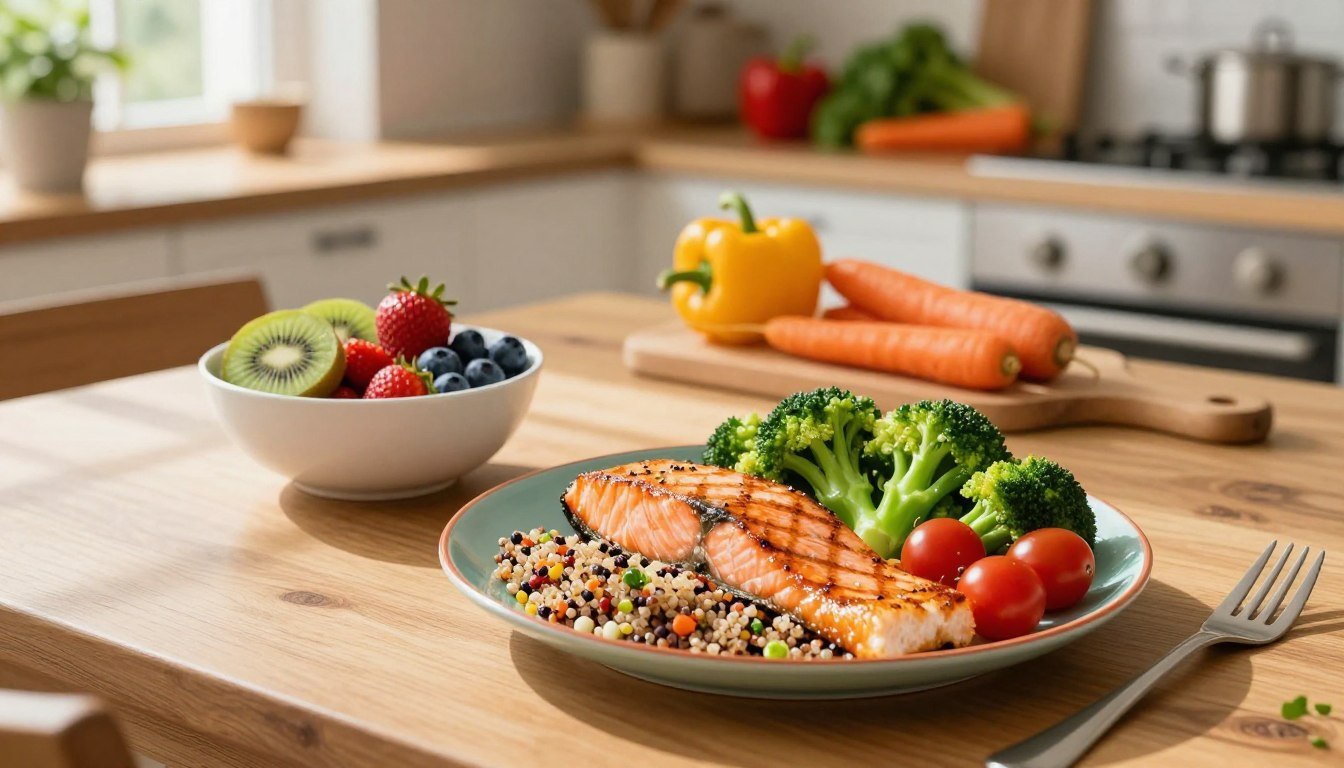
A useful starting plate has plenty of vegetables or fruit, a protein source, and a whole grain or legume. A flexible plate can make meal planning easier, since you can build it from foods your household enjoys.
Use about half the plate for produce, one quarter for protein, and one quarter for whole grains or legumes. This is a guide, not a required ratio at every meal. The 2026 American Heart Association dietary guidance recommends varied vegetables and fruits, with mostly whole grains instead of refined grains.
Build most meals from produce, a protein food, and a whole grain or legume, then adjust the mix to fit the meal.
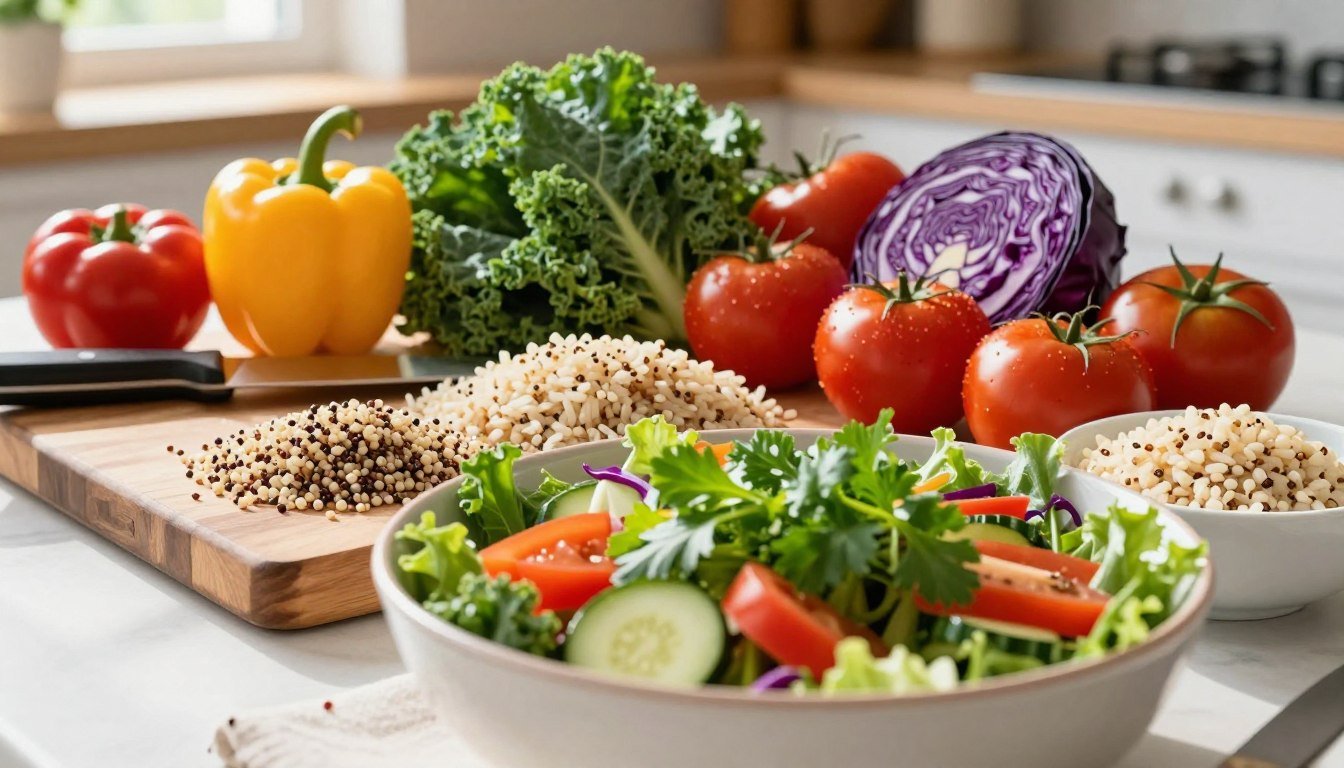
Build meals around vegetables, fruit, and whole grains
Try different colors and types of veggies across the week. Fresh, frozen, and canned produce can all help add variety to cooking. Choose canned options with little or no added salt when available.
Make whole-grain foods, such as brown rice, oats, or whole-wheat bread, a regular choice. Beans and lentils can bring both protein and fiber to a meal. You do not need to use the same ingredients every day.
Choose proteins, fats, and seasonings thoughtfully
Shift some protein choices from meat to legumes and nuts, and include fish and seafood regularly. If you eat red meat, choose lean, unprocessed types in limited portions. Low-fat or fat-free dairy can replace full-fat dairy.
Use oils and other unsaturated fats in place of saturated fats when you can. Choose minimally processed foods more often than ultraprocessed foods. Herbs, spices, citrus, and garlic can add flavor while helping you rely less on salt.
| Food choice | Choose more often | Limit or swap |
|---|---|---|
| Vegetables and fruit | Varied fresh, frozen, or canned produce | Fruit with added sugar |
| Whole grains | Oats, brown rice, whole-wheat bread | Refined grains |
| Protein sources | Beans, nuts, fish, seafood | Frequent red or processed meat |
| Dairy and fats | Low-fat dairy, unsaturated fats | Full-fat dairy, saturated fats |
| Added sugar and sodium | Low-sodium food, little added sugar | Highly sweet or salty choices |
Read labels to spot added sugars and sodium, especially in packaged sauces, soups, and snacks. People who do not drink alcohol should not start. People who drink should limit their intake.
Treat the plate pattern as a flexible guide, and adjust the mix to the meal and the people eating it.
How Can You Match Meals to Your Needs?
A personal meal plan can reflect health goals, food preferences, and the nutrition estimates that fit your age and activity level. The USDA DRI Calculator estimates daily calorie needs and recommended intakes for nutrients and water.
Use those estimates as a starting point, not a diagnosis or personal treatment plan. The calculator uses your height, weight, age, and activity level. Its nutrient advice draws on Dietary Reference Intakes set by the National Academies of Sciences, Engineering and Medicine.
Use estimates as a starting point, not a prescription
Estimates can help you think about portions and ingredients as you get started, but they cannot account for every health need. A meal plan should also reflect what you like, what you can cook, and what foods fit your day.
Healthy meal planning for beginners who are vegetarian can use beans, peas, lentils, nuts, seeds, eggs, and dairy, depending on the person’s diet. If you avoid several food groups or have a health condition, individual advice can help shape choices.
Count protein portions without overcomplicating them
An ounce-equivalent is a standard amount used to count foods in the protein-foods group. Common servings make the count simple, even when foods do not look alike on a plate.
| Food | Serving | Protein-foods ounce-equivalent |
|---|---|---|
| Cooked meat, poultry, or seafood | 1 ounce | 1 |
| Egg | 1 egg | 1 |
| Peanut butter | 1 tablespoon | 1 |
| Cooked beans | 1/4 cup | 1 |
| Nuts or seeds | 1/2 ounce | 1 |
Beans, peas, and lentils can count toward the protein-foods group or the vegetable group. The same serving cannot count in both groups. For example, decide which group a serving of beans fills when you plan that meal.
Use a calculator’s estimates as a conversation starter with a registered dietitian or clinician when you need individual guidance.
How to Start Healthy Meal Planning for Beginners
The simplest first-week routine has three jobs: choose meals, shop for what they need, and prepare a few ingredients ahead. Start small, with the hardest meal of your day or a few dinners, rather than planning every meal.
Begin planning at least three days before the week starts. That gives you time to choose food, shop, and prep without turning one day into a long chore. A calendar, paper, and handwritten list are enough; healthy meal planning for beginners can be free.
- Choose meals and recipes that suit the days ahead.
- Shop for the ingredients those meals need.
- Prepare a few ingredients before cooking days.
The order keeps the process clear, but each job can stay brief. Write down the meals you want to cover, then leave space for a change or a night when you do not cook.
A Friday planning, Saturday shopping, and Sunday prep rhythm is one possible schedule. It is not a fixed rule. You could plan on another day, shop on the way home, or prepare only one ingredient if that fits your week better.
When choosing a starting meal, focus on the one that creates the most stress. For some households, that is dinner after work; for others, it is packing lunch before school. Planning only that meal can still save time and make the routine feel useful.
You do not need an app, special containers, or a complex system to get started. A date on the calendar and a few meal names can show what needs attention. Keep the routine simple enough that you can repeat it next week.
Start with the meal that causes the most daily stress, then add another only after the first feels manageable.
How Do You Choose Recipes for a Busy Week?
Pick meals you genuinely want to eat, then let familiar favorites do most of the work in your first week. Familiar recipes take less thought, and they give you a steady base for new recipes.
Before choosing meals, check the fridge, freezer, and pantry for food you already have. Try no more than one new recipe in a week while a new routine is taking shape. That leaves room to learn a dish without making every night a test.
Rely on familiar favorites and shared ingredients
Choose recipes that share ingredients, so one purchase can serve more than one meal. If broccoli goes with chicken one night, you might use the rest with pasta later. This can help reduce waste and make the week easier to organize.
Think about leftovers as part of the recipe choice, not as an afterthought. Leftover chicken can go into a stir-fry, a garden salad, or chicken soup. Pick the next use before cooking, so you know how much food to set aside.
Match cooking effort to the day
Give hands-on cooking to a day when you have more time. On a tighter evening, a sheet-pan dinner or slow-cooker recipe can make cooking feel less demanding. Choose a recipe that fits the time and energy you expect to have.
A short list of reliable dinners is often more useful than a week packed with complicated ideas. If a recipe needs several steps, choose it for a day without another major task. The week should fit your life, not ask you to rearrange it around dinner.
Keep the ingredients and cooking method in mind when you choose a recipe. A meal that uses food already in your kitchen may take less effort than one that calls for several new items. Familiar food can also make it easier to bring family members into the plan.
Put the most demanding recipe on a day when you have enough time to cook it without rushing.
How Do You Build a Grocery List That Saves Money?
A grocery list saves money best when it begins with the meals you have already chosen and what is already in your kitchen. A two-pass method keeps the list focused: write each recipe ingredient, check what you own, then remove items already on hand.
Let the meals guide the shopping list, not the other way around. Group the remaining items by store department, such as produce, dairy, or grains. A clear list can help you avoid buying food without a planned use.
- Check the pantry and refrigerator.
- Compare unit prices on shelf labels.
- Choose seasonal produce when it suits your meals.
- Consider lower-cost beans and produce.
- Check freezer space before bulk buys.
The unit price, shown on the shelf below a product, helps compare the cost per amount. Package price alone can mislead when sizes differ. Check whether a larger amount makes sense for your household before adding it to the cart.
Large containers of low-fat yogurt and large bags of frozen vegetables can work as bulk buys. First check that you have freezer space for the vegetables. In-season fruits and vegetables may cost less, and firm produce can ripen at home for later in the week.
Some simple foods can cost less when you make them yourself. Cooking rice from scratch or cutting vegetables at home may cost less than buying convenience versions. Beans can be a lower-cost protein, while carrots, greens, potatoes, apples, and bananas are lower-cost produce choices.
Keep the list tied to the meals you plan to make. If one ingredient has several uses, note those meals beside it so you can judge how much to buy. The list can include staples, but only when you need to replace them.
A store trip is easier to manage when each item has a clear place in the week. If a recipe changes before you shop, update the list so you do not buy ingredients for a meal you no longer plan to make.
Before leaving the store, check the list once more against the week’s meals and the space available at home.
What Should You Prep Ahead, and What Should Wait?
A short prep session is most useful when it removes the slowest task from a meal you already plan to cook. Prep should follow the recipes, not become a goal of filling containers for their own sake.
Choose only the tasks that make planned meals easier. A few ready ingredients can save time on busy days without requiring a full day of cooking. Some steps are better left until cooking, when food tastes fresher or needs less handling.
- Wash and dry produce.
- Chop sturdy vegetables.
- Cook a grain or protein used in multiple meals.
- Portion and freeze a large batch of soup, stew, or casserole.
Use your recipes to decide what to do ahead. You might wash greens for one meal, chop carrots for another, or cook rice that appears twice. Leave delicate produce and quick cooking tasks until closer to mealtime if advance prep would make them less appealing.
A large batch of soup, stew, or casserole can be frozen in individual containers for meals during the week. Keep portions at a size you can use, rather than freezing one large block. Labeling each container also makes it easier to spot the right dish.
Handle cooked food safely as you prep. Refrigerate perishable food within two hours, or within one hour when the temperature is above 90°F. Cooked leftovers generally keep three to four days in the refrigerator; freeze them if you will not use them in that time.
When a task takes longer than the cooking it is meant to simplify, skip it. You can prep one useful ingredient and still have a successful meal prep routine. Keep the plan tied to meals you will actually make.
Label frozen portions with the dish and date so you can identify them before they disappear into the freezer.
What Could a Simple Seven-Day Meal Plan Look Like?
A good sample week repeats easy breakfasts and lunches, then gives dinner a few dependable anchors. Keep the morning simple with oatmeal, yogurt, or eggs, and choose what suits your household.
Repeatable meals make a seven-day meal plan easier to follow. Lunch can be soup, leftovers, or a whole-grain wrap with a filling you like. You can change the toppings or sides without rebuilding the whole schedule.
Keep breakfasts and lunches easy to repeat
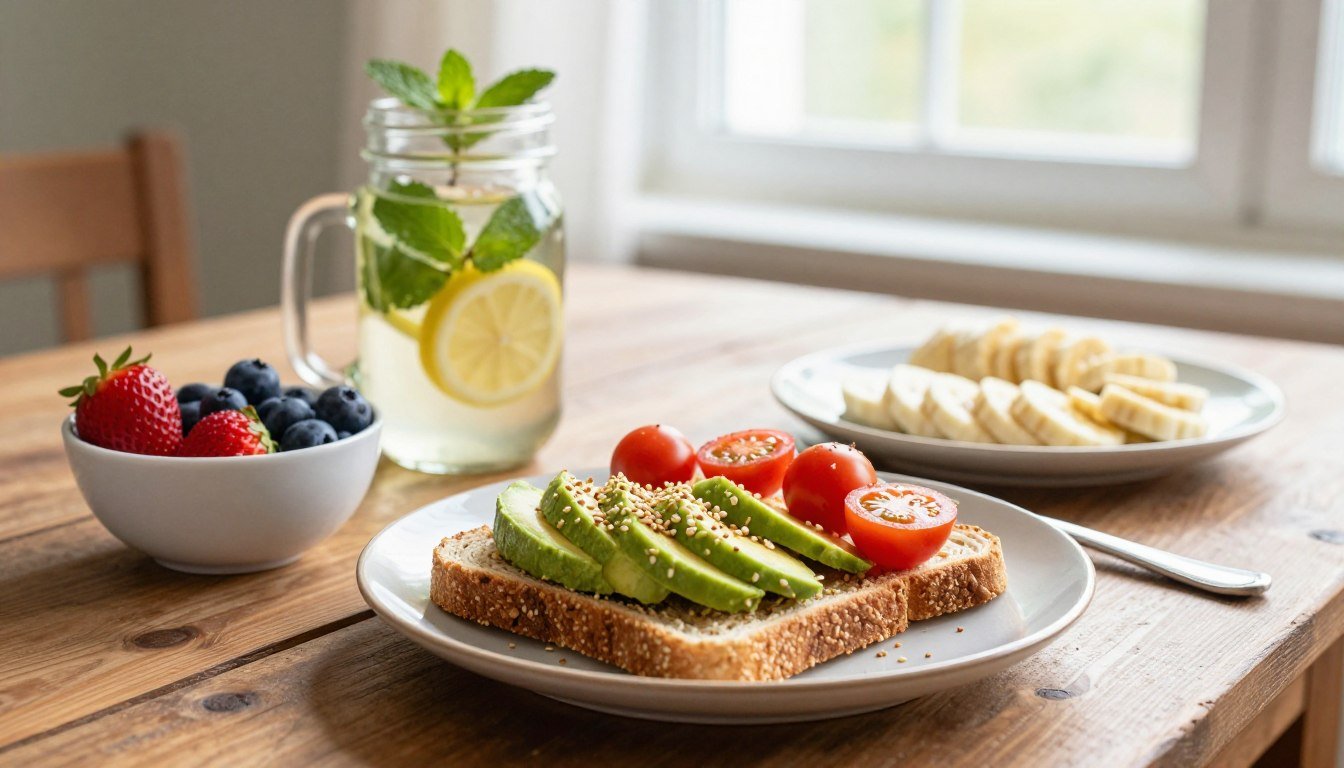
Use breakfast choices that take little planning, such as oatmeal with fruit, yogurt, or eggs with toast. A family can repeat these on different days or switch among them. Keep the choice practical for mornings when time is short.
For lunch, pack leftover soup, make a whole-grain wrap, or use another meal from the night before. A flexible lunch can help use food already cooked. It also leaves room for different appetites and schedules.
Give each dinner a clear role in the week
This dinner schedule gives each night an easy place in the week:
- Sunday: Minestrone soup with bread.
- Monday: Baked chicken with roasted potatoes and broccoli.
- Tuesday: Turkey tacos with brown rice and black beans.
- Wednesday: Leftover minestrone.
- Thursday: Whole-grain pasta with leftover chicken and broccoli.
- Friday: Homemade pizza with salad.
- Saturday: A night out or another flexible choice.
A kid-friendly seven-day meal plan can keep familiar foods on the table and offer toppings or sides for children to choose. Set out taco toppings or pizza choices so each person can shape part of dinner. You do not need to prepare a separate menu.
Adapt the meals to your family, including the size of each dish and the foods people already enjoy. The sample can guide dinner while breakfast and lunch stay flexible. If one meal does not fit, trade it for another scheduled day.
Keep one evening open for plans that change, and treat the menu as a guide rather than a promise.
How Can You Budget Without Making the Plan Rigid?
A food-budget benchmark can help you compare spending, but it does not decide what your household should buy. The USDA Food Plan uses weekly market baskets of food and beverages priced with average food prices.
Treat the USDA Food Plan as a reference point, not a personal budget. USDA has four cost levels: Thrifty, Low-Cost, Moderate-Cost, and Liberal. Each level describes a weekly basket, not a required shopping list for your home.
| USDA Food Plan | Cost-level name | What the benchmark uses |
|---|---|---|
| Thrifty | Thrifty | Weekly food and beverage basket priced at average food prices |
| Low-Cost | Low-Cost | Weekly food and beverage basket priced at average food prices |
| Moderate-Cost | Moderate-Cost | Weekly food and beverage basket priced at average food prices |
| Liberal | Liberal | Weekly food and beverage basket priced at average food prices |
The USDA updates all four cost levels monthly for food-price inflation. The update uses the Consumer Price Index for All Urban Consumers. That keeps the benchmark tied to changing average prices, but it does not make it a personal spending target.
Your household’s spending can reflect its needs, routines, and the foods people will eat. A benchmark may help you notice a change in your grocery costs. It cannot show which choices matter most to your family or whether a different schedule would work better.
Use the figure as one way to review your food budget, not as a rule that every household should meet. Your receipts show what your own shopping pattern costs. Your priorities help explain where you might want to adjust.
Use a benchmark as a prompt to review your own receipts and priorities, not as a reason to abandon foods that work for your household.
What Should You Do When the Week Changes?
A missed cooking night does not ruin the week if the plan has a simple fallback. Flexibility lets you swap meals between days, use an easy pantry or freezer option, and keep the schedule useful.
Keep one or two easy backup meals available for a day when time, energy, or ingredients change. Eggs, canned beans, frozen vegetables, and rice can help make a meal without following the original recipe.
A meal plan should reflect your appetite and schedule, not become an obligation to cook every item exactly as written.
If a dinner takes longer than expected, move it to another night and use a quicker meal instead. You can also switch two planned dinners when one set of ingredients suits the day better. The order is a choice, not a test.
When a plan changes before shopping, update the grocery list so it matches the new meals. That way, the list still reflects what you expect to cook. Keep the change simple, especially if the week is already busy.
A flexible plan can leave room for a sudden invitation, a late workday, or a meal that no longer sounds good. You do not have to cook every item exactly as written. Pay attention to appetite and schedule, then choose a meal that fits the moment.
Quick foods can still become a planned dinner. Rice with beans and frozen vegetables, or eggs with vegetables, can work when the evening falls apart. Keeping these items around gives you options without asking for extra planning.
Keep one or two quick backup meals on hand, such as eggs with vegetables or rice with beans, for evenings that do not go to plan.
Conclusion
A successful first week is one that makes a few meals easier, not one that follows a perfect schedule. Familiar recipes, a few planned dinners, and one meal built around leftovers are enough to make a useful start.
You can adjust the routine as you learn what saves time and what feels like extra work. Keep the parts that help, and let the rest go. The goal is a way of planning that fits your real week.
Write down two or three dinners for next week, check what you already have, and make your first grocery list.



Leave a Reply